
Sometime after Theo's third early morning weigh in of the wrestling season, and after Mari came home from a Saturday tournament limping slightly on a rolled ankle that turned out to be nothing more than a scare, I started paying real attention to two pieces of gear that keep showing up in the same conversation, a wobble board and a slant board. They look like they solve the same problem from the outside, something flat that ankle work happens on, but the more I actually used both, the more I realized they are built for two completely different jobs. The StrongTek Wooden Balance Board is the one that actually earns a spot on our living room floor now, but it did not replace the slant board sitting folded in the garage, because it was never trying to do the same thing.
Short answer up front, we kept both, and I would tell any tournament parent to expect the same. The StrongTek board is a genuine balance and ankle stability trainer, a gentle rocker on one side and a full 360 degree wobble surface on the other, so it asks your ankle, knee, and hip to keep making small corrections the entire time you are standing on it. A slant board does something else entirely, it holds one fixed angle so a calf or an Achilles can settle into a long, still stretch without you having to balance on top of anything at all. Below is the honest side by side, including the rows where the plain slant board wins outright.
| StrongTek Wooden Balance Board | Slant Board | |
|---|---|---|
| Holding a Long Calf or Achilles Stretch | A wobble surface never holds still, so leaning into one static calf stretch means fighting the board's movement the whole time instead of settling into it | Locks at a fixed angle, so the calf and Achilles can settle into one long, still hold without any extra balancing |
| Stability Underfoot | The rocker side and especially the 360 wobble side are built to move under your feet, that instability is the entire point of the balance work | Sits flat and does not shift once your weight is on it, which is exactly what a stiff Achilles wants after a long day |
| Usable While Doing Something Else | Needs real attention the whole time, standing on the wobble side while distracted is how you end up on the floor | Once you are set, you can stand on it reading a text or watching the next match from the bleachers without thinking about your feet |
| Easiest Starting Point for a Beginner | The rocker side is forgiving, but the 360 wobble side asked more of my balance than I expected the first week, and I would not hand it to a first timer without some caution | Step on, lean forward, hold still, nothing to learn about balance or falling |
| Best for Tight Calves Specifically | Trains the ankle to react and stabilize, it does not put a calf into a sustained stretch position | Built for exactly this, a fixed incline is the simplest way to load a calf into a long, honest stretch |
| Training Dynamic Ankle Stability | The constant small corrections on the 360 wobble side are the closest thing we have found at home to what Mari's club trainer has the team do for ankle proprioception work | A board that does not move cannot ask the ankle to react to anything, it simply is not built for this job |
| Room to Progress as Balance Improves | Flip it to the gentle rocker side for the first few weeks, then move to the full 360 wobble side once single leg holds get boring, one board covers both stages | One fixed angle is the whole product, there is nowhere for it to go once it stops feeling like a stretch |
| Standing Core and Hip Engagement | Staying upright on an unstable wooden surface pulls in the core and hips the entire time you are on it, not just the ankle | Core barely engages, the board is doing the holding, your calf is doing the stretching |
Where the StrongTek Board Wins
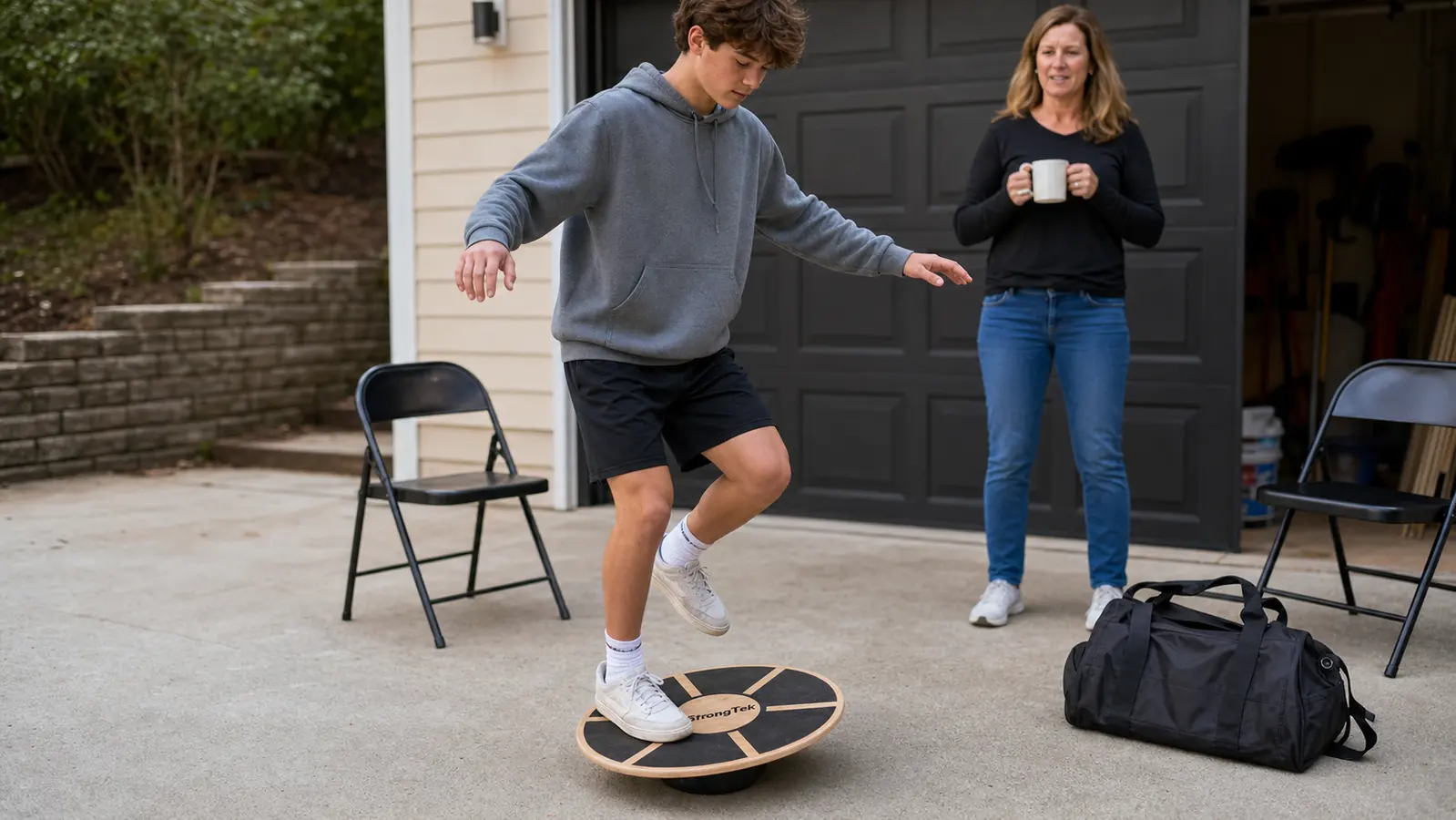
The whole reason I bought the StrongTek Wooden Balance Board was watching the actual trainer at Mari's club run the girls through single leg wobble work before a Saturday tournament, the kind where a foot stays planted on an unstable surface and the ankle just keeps making tiny corrections to stay upright. That is a different skill than stretching a calf, it is closer to what an ankle actually has to do mid match when a foot lands wrong on a rec center floor. The StrongTek board flips between a gentle rocker on one side, good for a first week of single leg holds, and a full 360 degree wobble surface on the other, which asks for constant small corrections in every direction, not just front to back. Theo uses the wobble side most mornings before school, and I will say plainly, I am not a trainer or a physical therapist, so I cannot promise it prevents an ankle injury. Nobody selling ankle gear honestly can promise that. What I can say is it matches the kind of proprioception work the real trainer already has the team doing.
It also holds up better than I expected for something that gets stepped on daily by two teenagers and occasionally by me after a long day on the bus lot. The non slip surface has not gone slick with sweat the way I worried it might, and the wood itself has not so much as creaked under Danny, who is not a small guy. Where it earns its keep most, honestly, is that it covers two stages at once. The rocker side is forgiving enough for a first attempt, and the 360 wobble side is hard enough that Mari still uses it to warm up her standing leg before a match months later. A slant board cannot do either of those jobs, because it does not move at all, which is exactly the point of a slant board and exactly why it is not a substitute for this kind of work.
Where the Slant Board Wins
None of that makes the wobble board the right tool for every ankle problem in this house, and the slant board sitting folded in our garage proves it. When my right hip and calf are tight after a long tournament day on the bleachers, the last thing I want is something moving under my feet. I want to lean my weight forward onto a fixed incline, hold still, and let the stretch do its work for a minute or two without also managing my balance. A slant board does exactly that and nothing else, which sounds like a limitation until you actually need a long, quiet calf stretch and realize the wobble board simply cannot give you one.
It also wins on the boring, practical stuff that decides what actually gets used week to week. A slant board asks nothing of you once you step onto it, no learning curve, no risk of losing your footing, which makes it the one I would hand Danny after a long shift on his route when his back is tight and he does not want to think about anything. It is also the one I can stand on for a full two minutes while reading a text or half watching whatever match is happening on the far court, since it holds its angle with zero attention from me. The StrongTek board demands your attention the entire time you are on it, on the wobble side especially, which is a real feature for balance training and a real drawback anytime you actually just want to stretch.
The slant board holds still and lets the stretch do the work. The wobble board keeps moving and makes the ankle do the work. We stopped trying to make one replace the other.
What One Week Actually Looked Like
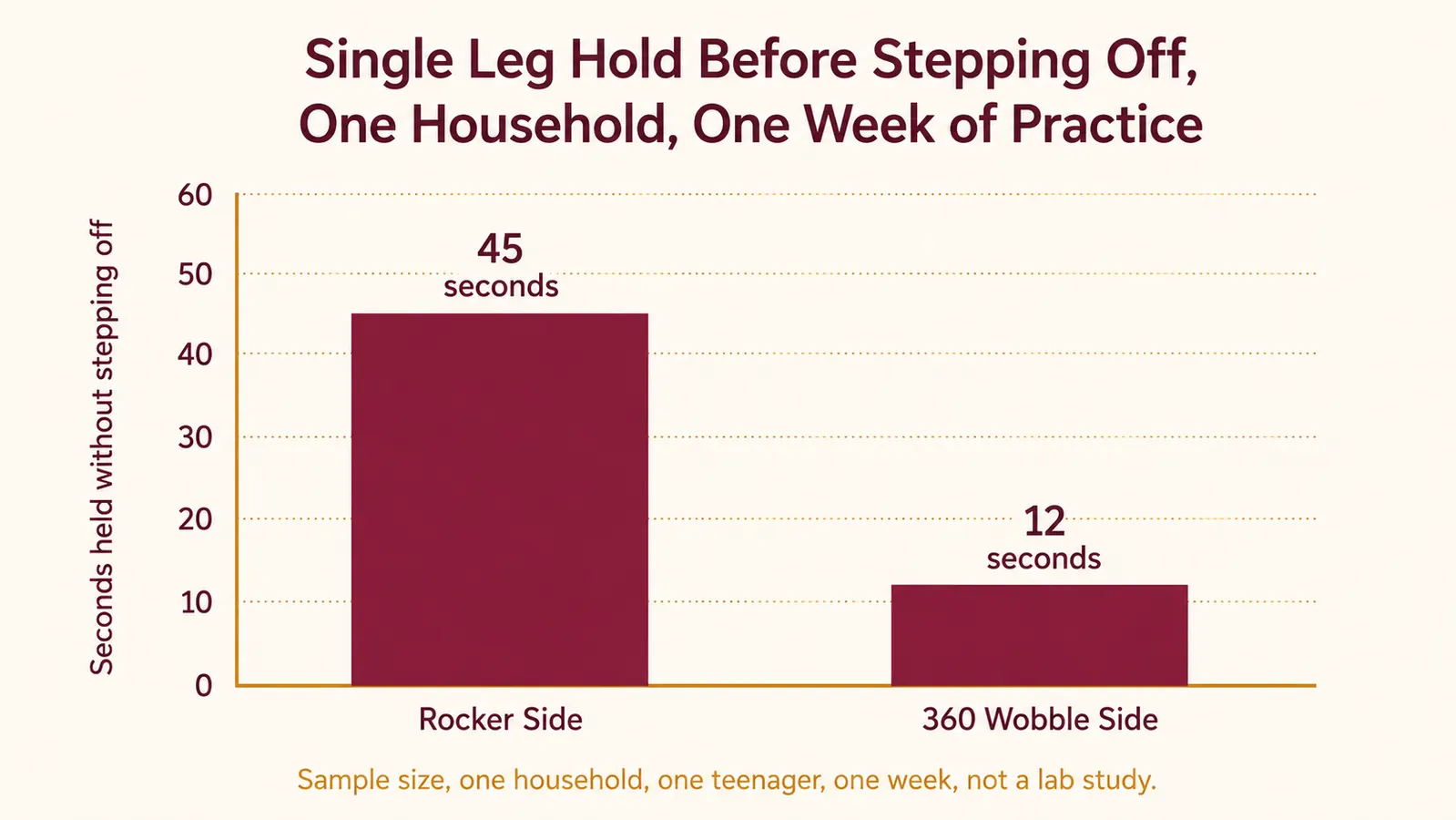
I finally did what I do with most gear that shows up in this house, timed it with the stopwatch on my phone, over one week of Theo's morning routine before school. I wanted to know how long he could actually hold a single leg stance before stepping off, on the gentle rocker side versus the full 360 wobble side of the StrongTek board. On the rocker side, he held close to forty five seconds most mornings, steady enough that he started checking his phone halfway through. The wobble side was a different story, twelve seconds on average before a foot came down to catch him, even by the end of the week. That gap is a real part of why the board earns credit for progression, one side is genuinely easier than the other, with real room to grow into the harder one over time.
That is one household, one teenager, one week, not a lab study, and I would not want anyone reading it as more than that. What it told me, honestly, is that the wobble side is doing real work, not just spinning under his feet for the sake of it. The slant board never got timed the same way, because there is nothing to time. Some evenings I stand on it for a full two minutes without once checking a clock, and that is fine, that is the job it is doing. The two boards measure success in completely different units, seconds held upright on one, minutes of a quiet stretch on the other, and that difference is really the whole comparison in miniature.
Tired of ankle rolls that seem to come out of nowhere between matches?
The StrongTek Wooden Balance Board flips from a gentle rocker to a full 360 degree wobble surface, so the same board covers a first week of single leg holds and the harder proprioception work Mari's club trainer already runs the team through. See today's price and current availability on Amazon before your next tournament weekend.
Amazon Check Today's Price on Amazon →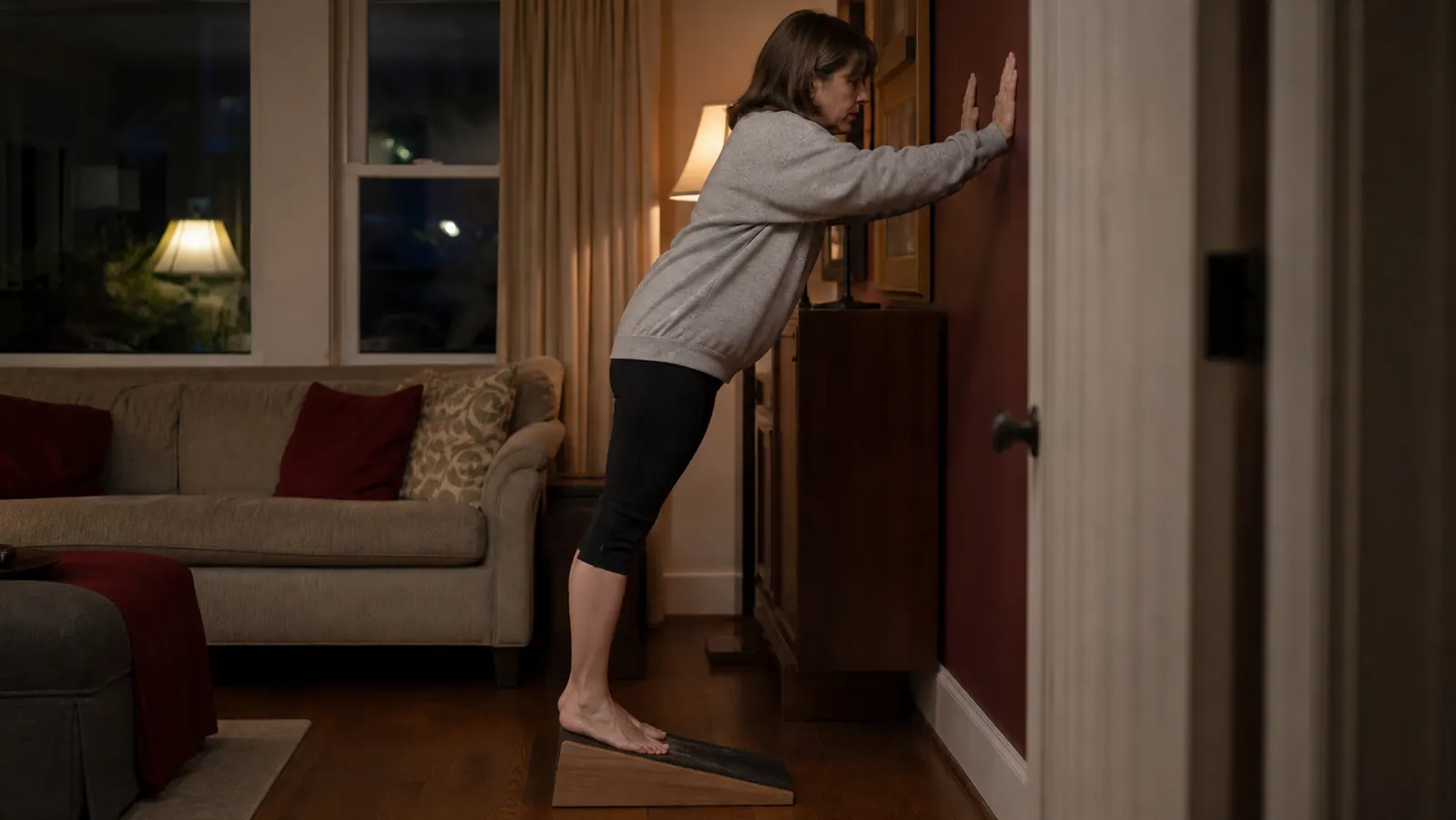
Who Should Buy Which
If what you are actually chasing is dynamic ankle stability, the kind of work that helps a foot react better when it lands wrong on a gym floor, start with the StrongTek Wooden Balance Board. I wrote up a full wrestling season with it in my long term StrongTek balance board review, and the steps we actually run at home, no trainer required, are laid out in how to build ankle stability between matches. If what is actually bothering you is a tight calf or a cranky Achilles that just needs a long, still stretch, a slant board is the simpler answer, and I would not talk you out of buying one first.
Most houses running a sports schedule like ours end up needing both eventually, and that is genuinely fine. I am not a physical therapist, and if an ankle injury is already in the picture, actual pain, actual swelling, actual instability that does not settle down on its own, that is a conversation for the trainer at Mari's club or a real doctor, not a wobble board bought off Amazon. For everyday ankle stability work between matches and a tight calf that needs stretching out, though, these two tools split the job cleanly, and knowing which one you actually need saves you from buying the wrong one first.
Between the two, the StrongTek board is the one that actually stays out of the garage.
It will not replace a long, still calf stretch on a slant board some nights, but for daily ankle stability work between matches, it earned its spot on our living room floor. Check today's price on Amazon and see if it earns one on yours.
Amazon Check Today's Price on Amazon →