
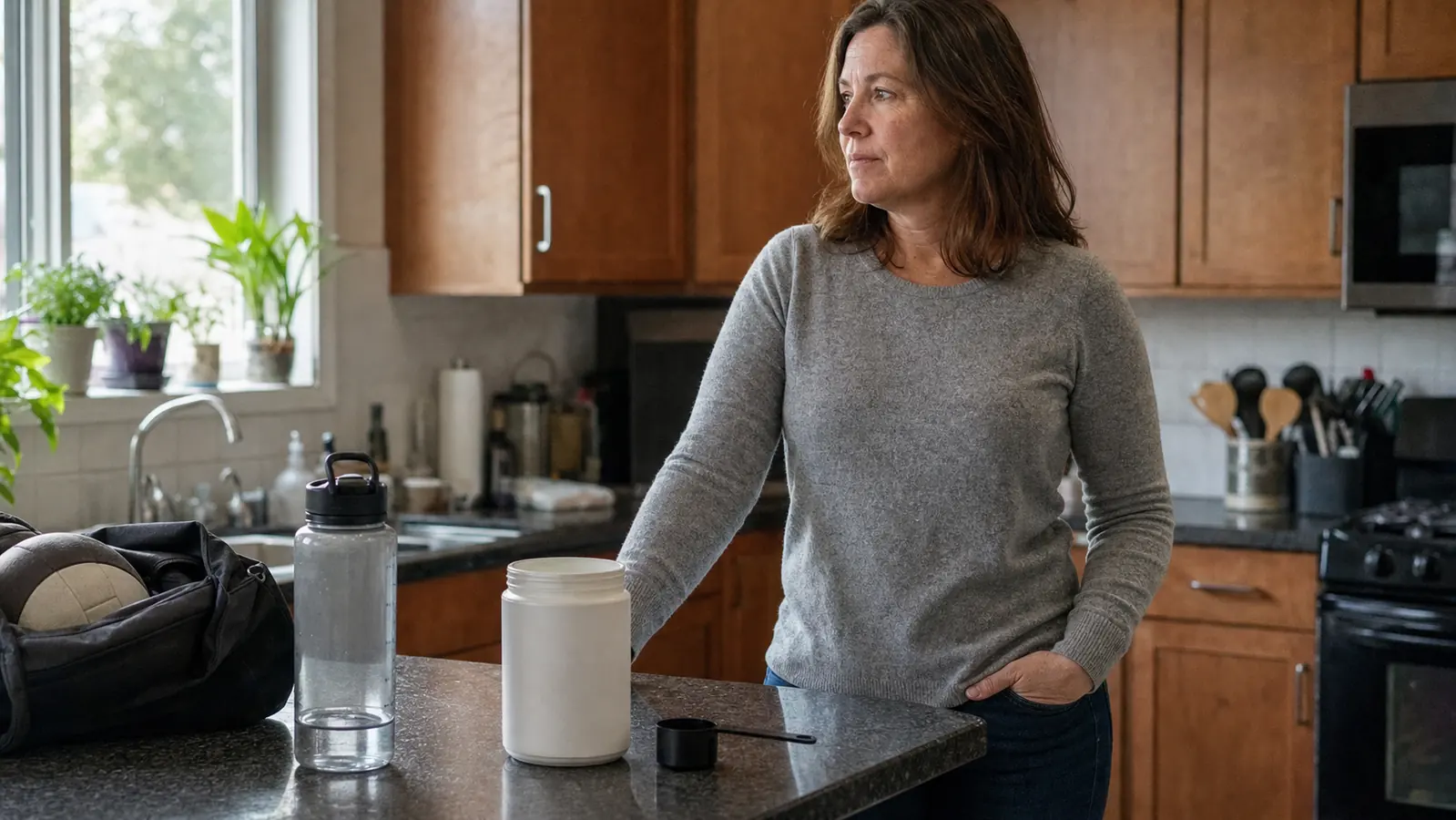
Somewhere between the snack table and the folding chairs, at almost every tournament we've been to the last two years, somebody brings up glutamine. It's usually the parents leaning against the fence during pool play, comparing notes on what their kid takes before a big meet, and I hear it in Mari's group chat threads too, teammates asking each other what brand their families use. We eventually landed on Nutricost L-Glutamine Powder, the unflavored tub that lives on our kitchen counter next to the protein and the multivitamins, and I want to walk through honestly why this specific supplement keeps coming up in conversation, because popularity and proof are not the same thing.
I'm not a nutritionist and I don't pretend to be one, I'm a mom who's spent eleven years listening to what other sports parents say and comparing it to what I can actually verify. Some of the ten reasons below are about why this conversation keeps happening, not about what the powder does inside anyone's body, and I think that distinction matters more than anything else in this article.
Everyone's Talking About Glutamine. Here's What Actually Matters Before You Add Anything to a Teenager's Routine.
Before adding any supplement to a teen athlete's day, the conversation belongs with a team trainer or a doctor first. If that conversation has already happened and you're just deciding what to buy, this is the unflavored powder that ended up in our kitchen after that conversation.
Amazon Check Today's Price on Amazon →It Shows Up in Every Team Parent Group Chat
Somebody posts a question about supplements at least once a season, and glutamine is almost always in the replies within an hour. It's become one of those topics that circulates through sideline conversation the same way sunscreen brands and cooler recommendations do, more word of mouth than research citation. I've had three different volleyball moms ask me what we use, and I always give the same answer, that we use Nutricost L-Glutamine because it's unflavored and mixes into whatever Mari's already drinking, not because I can point to solid proof it does anything measurable for a healthy teenager.
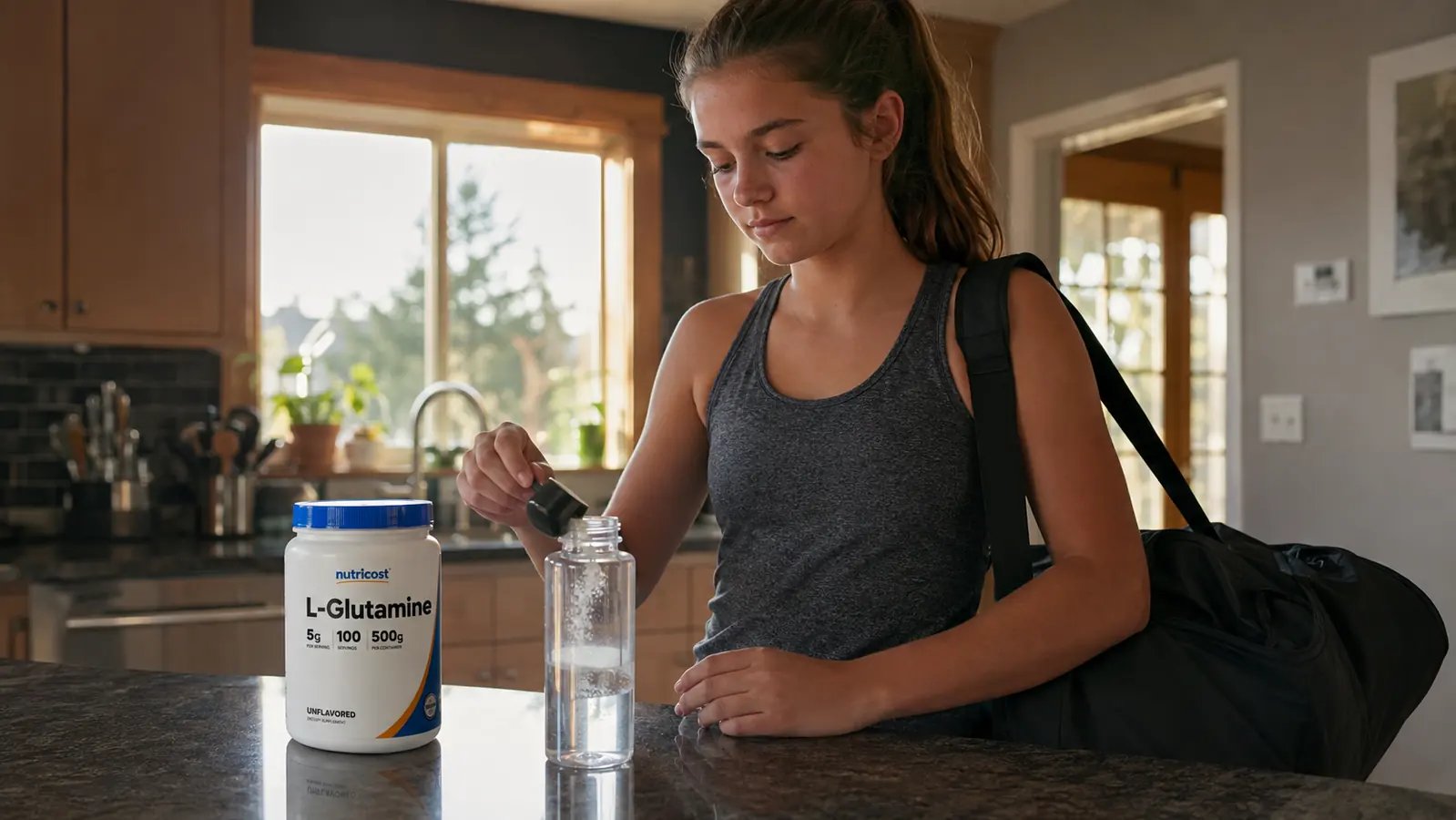
It's Locker Room Talk Before It's Ever a Doctor's Recommendation
Theo heard about it from an older kid on varsity wrestling before I ever heard the word. That's usually how it spreads, one athlete tells another what they take, and it moves through a team faster than any article could. The problem with locker room advice is that nobody's checking dosages or medical history, and a fourteen year old repeating what a seventeen year old told him isn't the same as a conversation with a trainer. A lot of what teenagers hear about glutamine started this way, not in a clinic.
The Studies People Quote Are Almost Never About Healthy Teenagers
When you read past the headlines, most of the strongest glutamine research comes from surgical patients, burn units, and people recovering from serious illness, situations where the body's own glutamine supply is genuinely depleted. That's a different body doing a different job than a healthy fifteen year old who eats three meals a day and sleeps in her own bed. I have not found convincing evidence that supplementing changes much for an athlete who isn't sick or critically stressed, and that gap between the clinical research and the sideline conversation is the whole reason this article exists.
In Well Fed, Healthy Athletes, the Evidence Is Mixed at Best
Even setting aside the clinical studies, the research done directly on healthy exercising people is inconsistent, some trials show a small effect on one measure, most show nothing worth mentioning, and none of it adds up to a clear, repeatable benefit. I'm not going to tell you Nutricost L-Glutamine sped up recovery, cut down soreness, or boosted anyone's immune system, because I genuinely don't know that and I haven't seen it, and no honest review should claim otherwise for a scoop of powder in a glass of water.
It Feels Like One Controllable Thing in an Uncontrollable Season
Club season throws a lot at a family that nobody can control, the schedule, the refs, whether Mari's setting hand is having a good day. A scoop of powder in a water bottle is small and simple, and I understand why parents reach for something they can actually do something about. That's an honest reason this keeps coming up in conversation, it has more to do with wanting to feel like you're helping than with proof of anything.
It's a Habit, Not a Mechanism
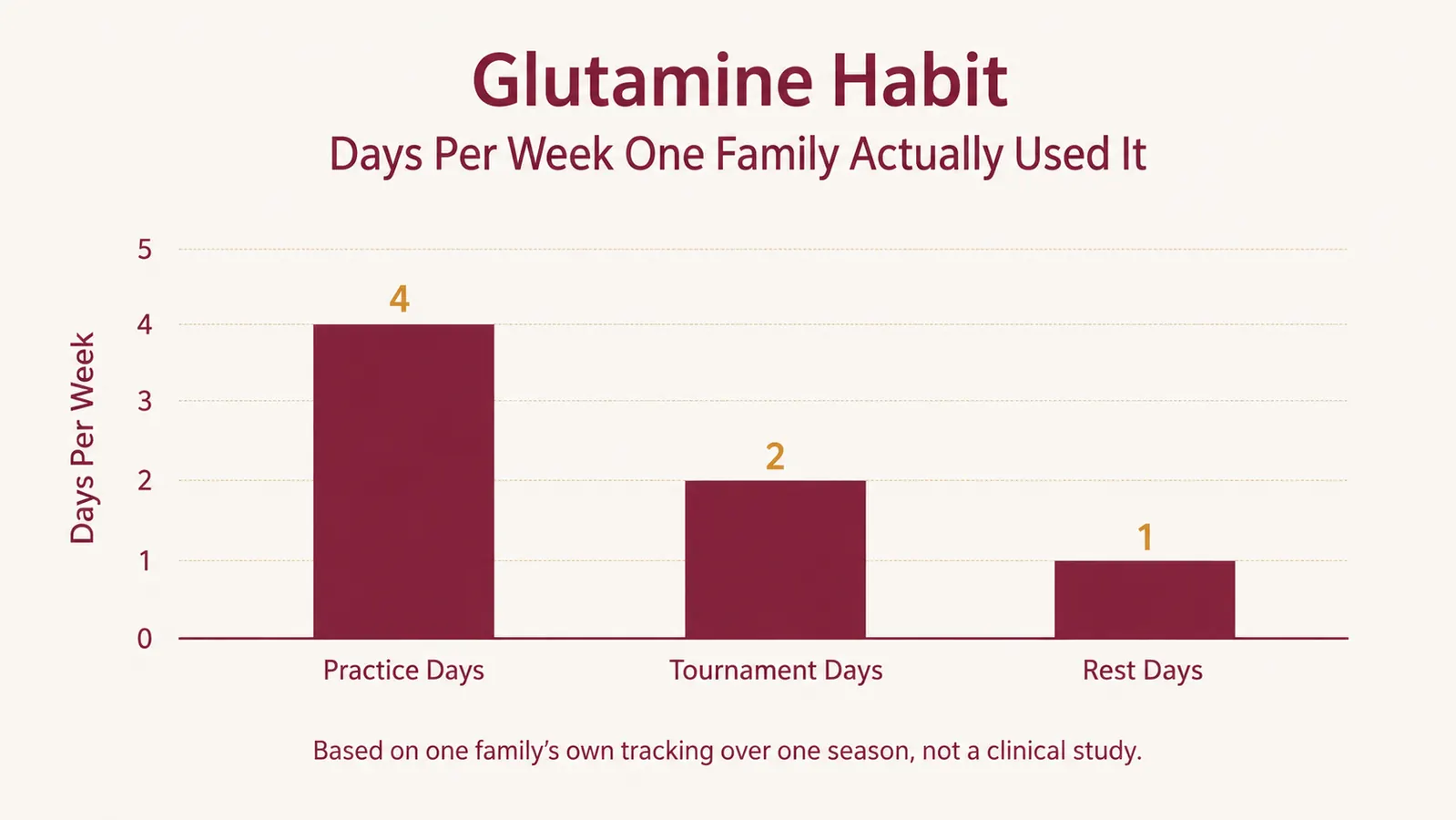
What Nutricost L-Glutamine actually has going for it in our house is that it's unflavored and dissolves fast, so it's easy to build into a routine, a scoop before or after practice, nothing to remember beyond that. I think that's the honest appeal, it's a habit simple enough for a teenager to actually keep doing, not a magic ingredient. A supplement nobody takes consistently doesn't do anything, so ease of use is worth something on its own, just not the thing people usually credit it for.
Protein Totals and Sleep Do More of the Real Work
If I had to rank what actually seems to matter for how Mari and Theo bounce back between matches, total protein across the day and how much sleep they're actually getting would be well above any powder, and it isn't close. A kid who's shorting themselves on protein or staying up late on a phone isn't going to fix that with a supplement, and I'd rather spend the conversation on getting enough at dinner and getting them to bed than on what's in the cabinet.

The Marketing Keeps Repeating Claims the Research Never Quite Backed Up
Supplement labels and fitness forums tend to recycle the same handful of claims about immunity and gut health year after year, often citing decades old clinical studies on sick patients as if they apply directly to a healthy teenager drinking a scoop after school. That's marketing outrunning evidence, and it's a big part of why glutamine has this reputation that doesn't fully match what more recent research on healthy people actually shows.
This Is a Team Trainer or a Doctor's Call, Not Mine
Mari and Theo are both minors, and I don't make decisions about what goes into their bodies on my own judgment alone, especially anything ingestible. Before Nutricost L-Glutamine or anything else went into our kitchen, that conversation happened with the actual trainer at Mari's club and with our family doctor, the same way it should happen in any house with young athletes. If your kid's asking about this because of something they heard in a locker room, that's a conversation worth having with a real professional first, not a decision to make off a group chat.
It's a Low Risk Habit We Kept, Not a Miracle We're Selling
After all that, here's where we landed. Nutricost L-Glutamine stayed in the kitchen because it's unflavored, mixes easily, and hasn't caused anyone in this house any trouble, and once a doctor and a trainer were fine with it, that was enough for us to keep it around as a small daily habit. I'm not telling you it fixed soreness or sped anything up, because I don't believe that and I haven't seen it. For how we built it into a routine, see how to add glutamine powder to a teen athlete's routine, and for six months of watching it do basically nothing dramatic, that's the honest version in our Nutricost L-Glutamine review after six months.
What I'd Skip
I'd skip believing anything that promises faster recovery, less soreness, or a stronger immune system from a glutamine scoop, because I haven't found evidence that holds up in a healthy teenager, and I'd be lying if I said otherwise. I'd skip adding it to a minor's routine without a real conversation with a trainer or doctor first, no matter how normal it sounds in a group chat. And I'd skip letting it replace the two things that actually seem to move the needle around here, enough protein across the day and enough sleep at night.
Nobody in a parent group chat is running a clinical trial. Popular and proven are two different words, and this powder has earned the first one a lot more than the second.
If a Trainer or Doctor Has Already Cleared It, Here's the Powder That Ended Up in Our Kitchen
Nutricost L-Glutamine is unflavored, mixes into water or a smoothie without a fight, and hasn't caused any trouble for Mari, Theo, or Danny. That's the honest case for it, a simple habit, not a guarantee.
Amazon Check Today's Price on Amazon →