
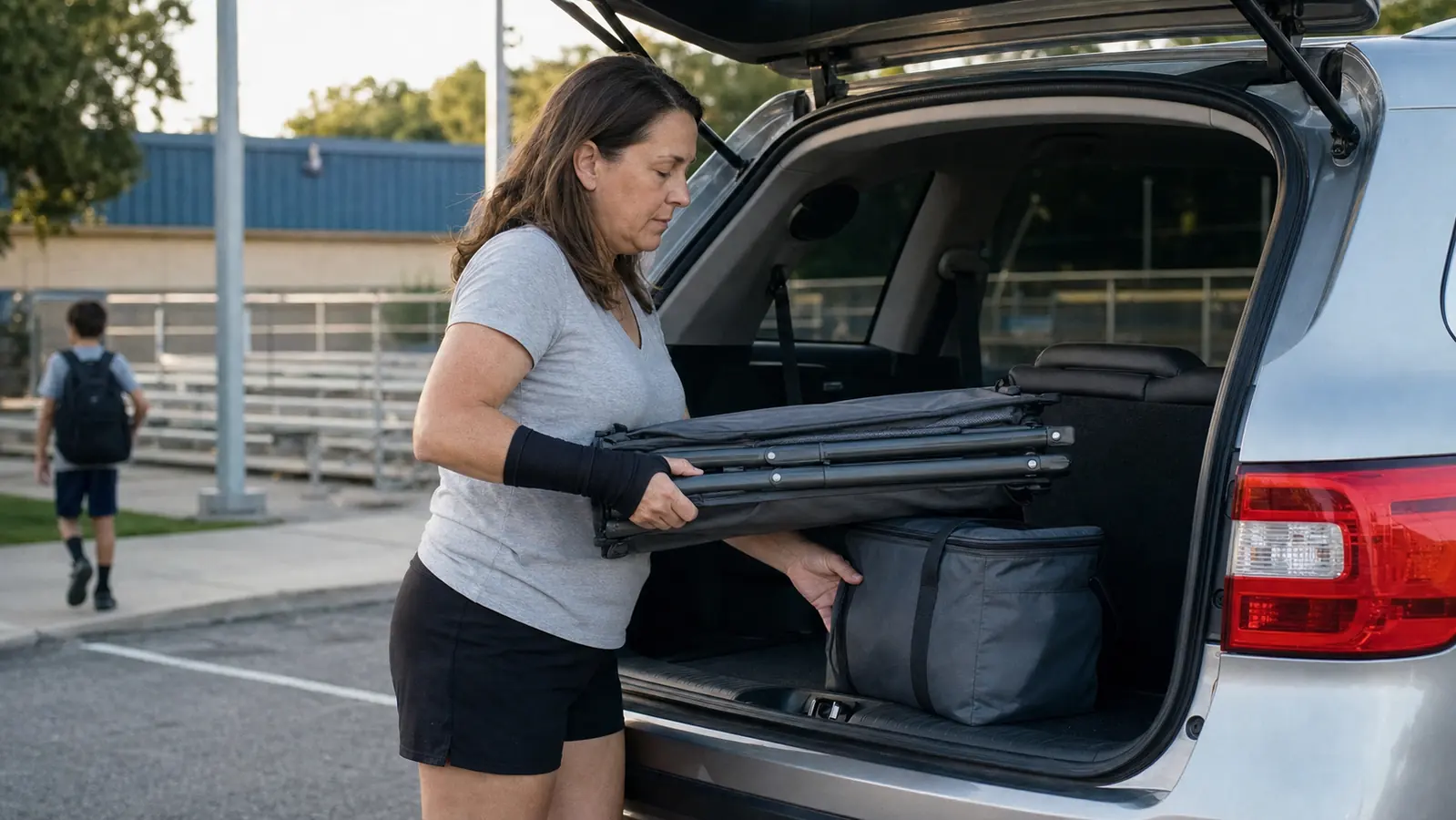
Here is what the product photos will not tell you about a wrist compression sleeve. It is not a small, forgettable thing you forget you are wearing. It is fabric wrapped snug around your hand for hours at a time, and depending on the day, that is either exactly what you needed or the most annoying thing in your bag. I am Rhonda Espinoza, I have spent eleven years hauling coolers and folding tables to volleyball and wrestling tournaments, and when my grip started giving me trouble a couple of seasons back, a compression sleeve seemed like the obvious cheap thing to try before anything more serious. We ended up with a pair of INDEEMAX sleeves, one for me and one that Danny grudgingly agreed to test on his delivery route, and this is the honest version of what happened.
I already wrote up how the sleeve held up over a full tournament season in my long-term review, and that one is more about whether it lasted. This one is different. This is the sizing mistake we made, the seam that bothered me for two weeks straight, what heat does to a sleeve like this once summer hits, and what I now think a compression sleeve genuinely can and cannot do for a tired hand. I am not a trainer, I am not a nurse, and I did not run a real study. This is one household's honest experience, not medical advice, and I want to be upfront about that before you read another word.
The Quick Verdict
A genuinely useful compression sleeve for tired hands and light strain, undercut by sizing that runs small, a seam that took getting used to, and a copper claim that does not hold up to a plain reading of the evidence.
Amazon Check Today's Price →Read This Before You Guess at a Size
The sizing on this one caught us off guard, and it is the single biggest thing worth knowing before you order. Check today's price and the size chart on the listing, then keep reading for what we learned the hard way.
Amazon Check Today's Price on Amazon →How We Actually Use It
My pair lives in the console of the Honda Pilot, which is not glamorous but means it is actually there when I need it. After a Saturday of hauling folding chairs and the big cooler in and out of the hatch, my right hand and forearm are usually the first things to complain, before my hip even gets started. I will slide the INDEEMAX sleeve on for the drive home, and it genuinely helps that last stretch when my grip on the steering wheel is tired and my hand feels swollen from carrying things all day.
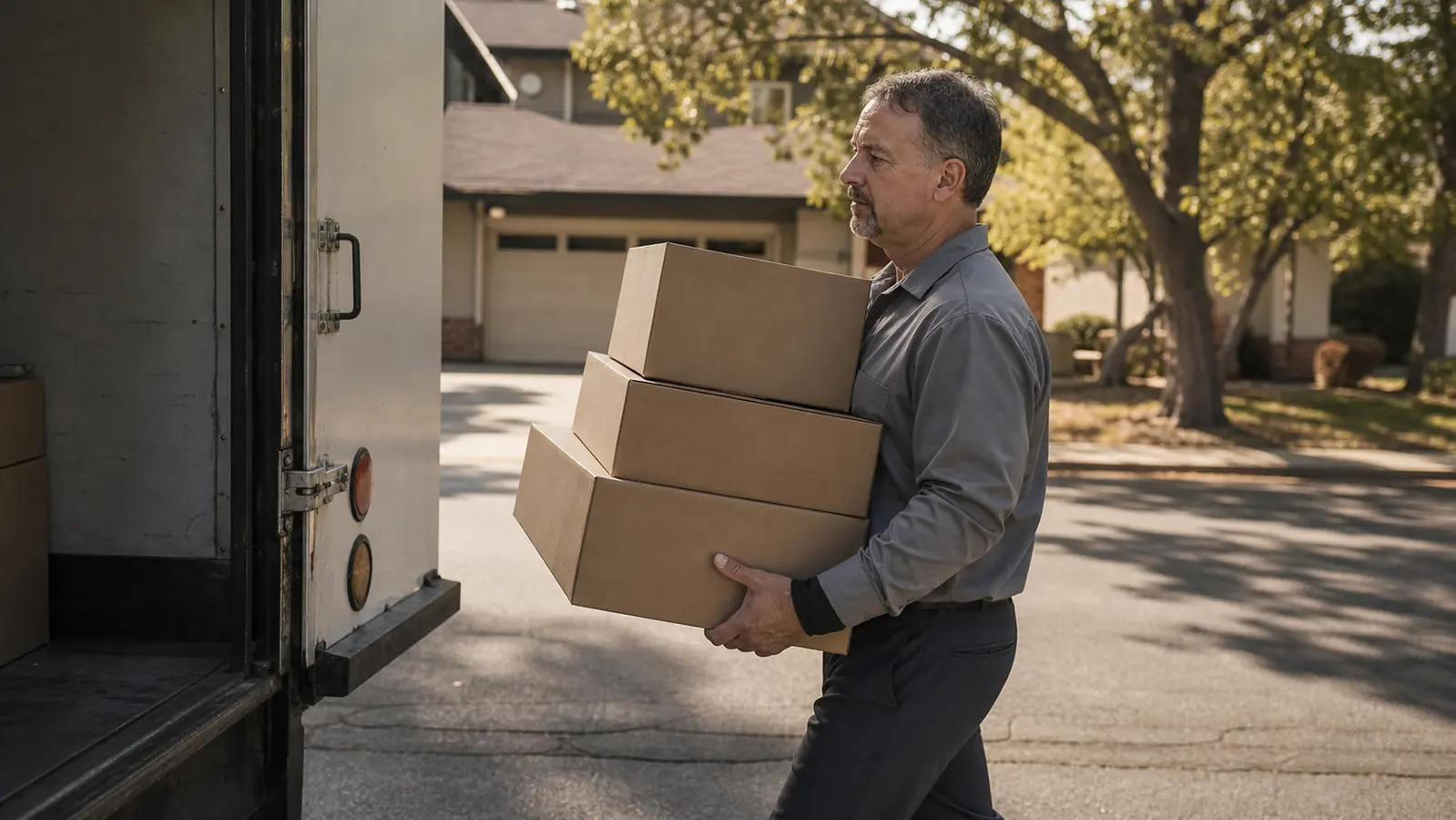
Danny's situation is different. His route has him in and out of a truck all day, gripping a wheel, a scanner, and stacks of boxes for hours at a stretch, and his shoulder gets most of the attention around here because it is the worse problem. But his hands get tired too, especially by the end of a route with a lot of heavier packages, and he started wearing the second sleeve on afternoon stops when his grip felt like it was starting to slip on the box edges. He will not wear it all day. He wears it for maybe the last two or three hours, which tells you something about how it actually fits into a real workday instead of a tidy morning routine.
Neither of us wears it constantly, and I think that matters. This is not a thing either of us reaches for automatically every single day. It is a thing we reach for on the harder days, when the hauling or the gripping has already added up by mid afternoon. That inconsistent use is honest, and it is probably closer to how most people actually end up using something like this than the daily wear the marketing photos suggest.
The washing routine matters too. INDEEMAX recommends hand washing and air drying, and the one time I tossed mine in with a regular load and dried it on low heat, the compression noticeably loosened up within a few weeks. Danny's held its shape better mostly because he is worse about washing his at all, which tells you something about how much heat from a dryer actually does to compression fabric like this. If you want it to keep doing its job for more than one season, plan on hand washing it the boring way instead of tossing it in with the towels.
The Sizing Runs Small, and It Cost Us a Return
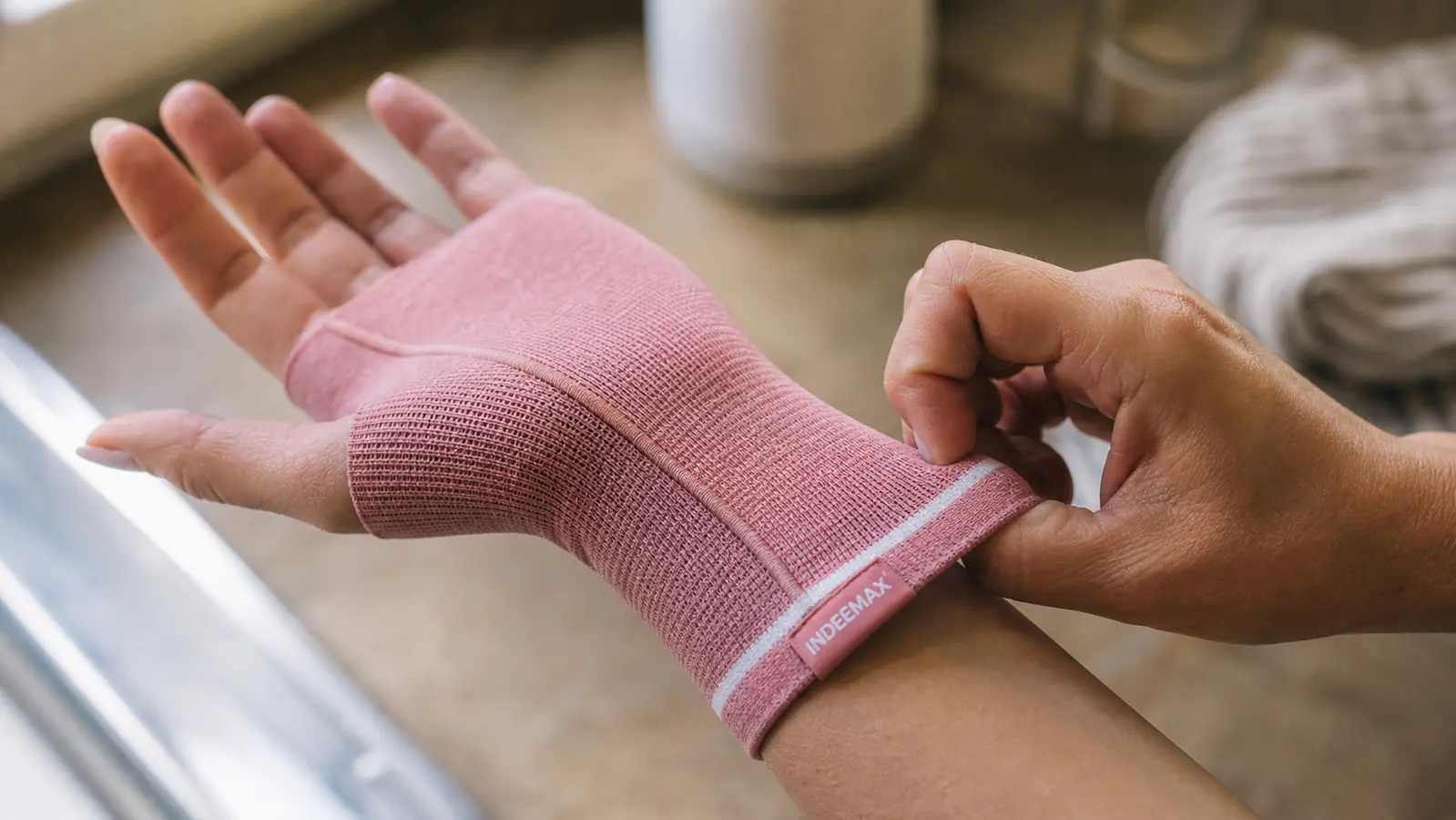
I measured my hand against the size chart before ordering, picked what the chart said should fit, and the sleeve I got was noticeably tight going over my knuckles. Not painfully tight, but tight enough that I had to work it on and off rather than sliding it easily, and after twenty minutes my fingertips had that faint tingling feeling that tells you something is compressing more than it should. I sized up on the replacement and that one fits properly, so this is fixable, but it cost us a week of waiting on a return and a false first impression that almost had me writing the whole thing off.
Danny's hands run larger than mine and he had the same problem, even after going up a size from what the chart suggested for him. If your hands run anywhere near the boundary between two sizes on the INDEEMAX chart, my honest advice is to size up rather than down. A compression sleeve that is too snug does not give you more benefit, it just cuts off circulation to your fingertips, and that is not something to push through.
The Seam Down the Palm Side Bothered Me for Two Weeks
Once the sizing was sorted out, the next thing I noticed was the seam that runs along the inside of the palm where the fabric is stitched together. On a sleeve I am using for twenty minutes in the car, it is not a big deal. On a longer stretch, like the Saturdays when I keep it on through the drive home and then again while I am unloading the hatch at the house, that seam presses right into the base of my palm and it is noticeable enough that I catch myself repositioning it.
It softened with wear and with washing, and by the third or fourth week it stopped bothering me the way it did at first. I do not think this is a defect so much as it is just how a compact compression sleeve is built. But if a seam pressing into your palm for extended periods sounds like it would bother you, it is worth knowing that going in rather than discovering it two hours into a long drive.
By July, Heat Became the Real Problem
This is the part nobody warns you about, and it is the biggest honest knock I have against the INDEEMAX sleeve. Compression fabric holds heat, and in a Grand Junction summer, that matters. Danny's route runs through the hottest part of the day, and once temperatures climb, wearing anything snug on his hand and forearm gets uncomfortable fast. He started leaving the sleeve off entirely from about mid June through August, which is exactly the stretch of the year when his hands are working the hardest.
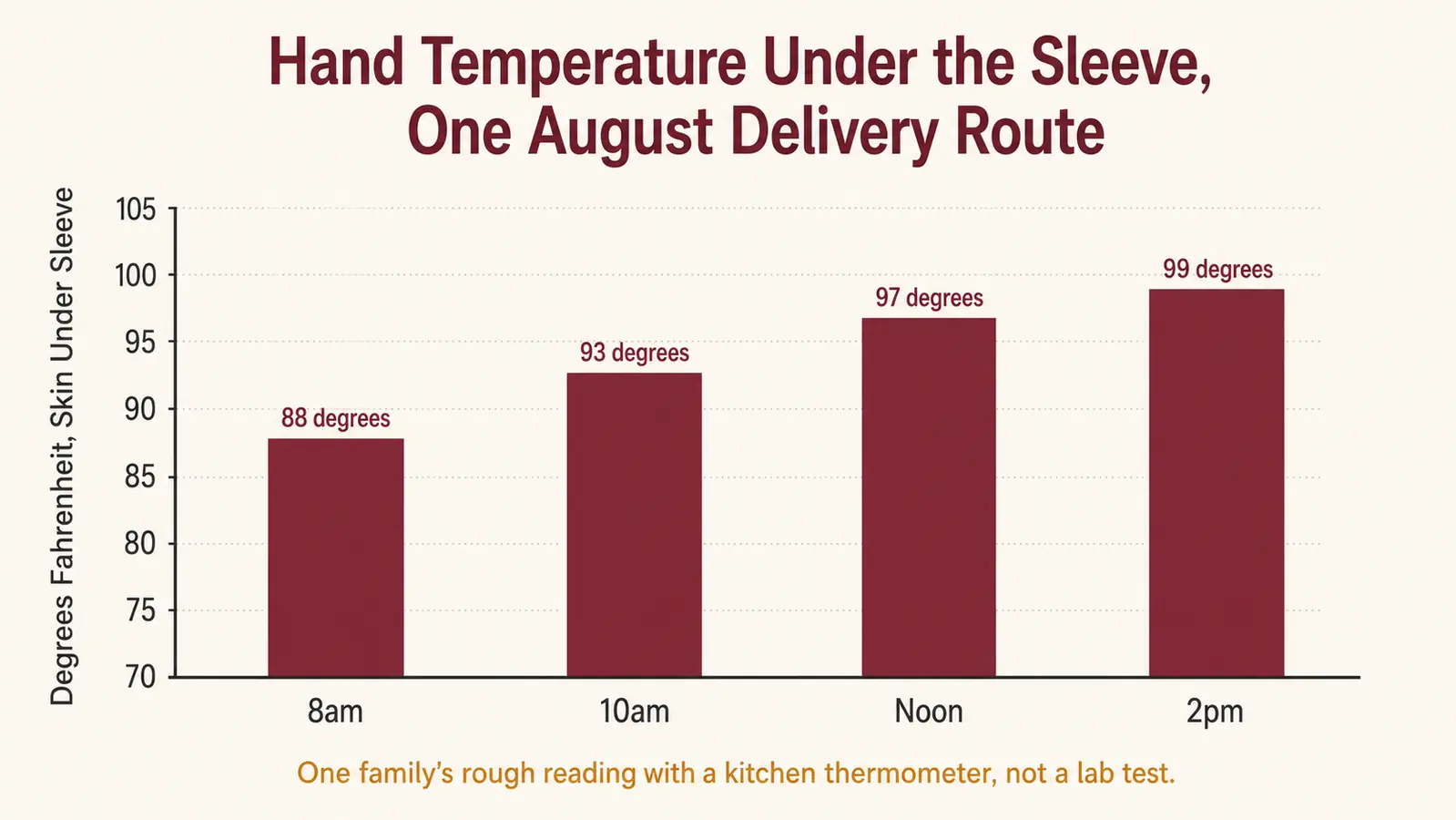
I did a rough check with a kitchen thermometer against the skin under the sleeve one hot delivery morning, more out of curiosity than anything scientific, and the reading climbed steadily from morning into early afternoon as the sleeve trapped heat against his skin. That is one household's rough reading, not a lab result, but it matched what Danny was already telling me, which is that the sleeve feels fine in the cool morning hours and increasingly unpleasant as the day heats up. If you live somewhere hot, or your use case is outdoor and summer heavy the way his route is, plan on this being a spring and fall tool more than a July and August one.
The Copper Claim Deserves an Honest Answer
The INDEEMAX listing leans hard on the copper infused fabric, and I want to be straight with you about that because it is the part of the marketing that bothered me once I actually looked into it. There is no solid evidence that copper woven into fabric does anything on its own for pain, swelling, or healing. The idea gets repeated a lot in this whole category of compression gear, but when you look for real research behind it, it is thin. What copper infused compression wear does have going for it is the compression itself, which is a real, well studied mechanism, and a reasonable one for mild swelling and tired, achy hands.
So here is my honest read after a season of using it. The sleeve helps because it compresses, not because it is copper. If you strip the copper marketing away entirely, you are left with a snug, supportive sleeve that gives mild, temporary relief for the kind of ordinary hand and forearm fatigue Danny and I get from hauling and gripping all day. That is a real, modest benefit. It is just not the special metal infused benefit the packaging implies, and I would rather tell you that plainly than let the copper claim do work it has not earned.
I look at this the same way I look at most of the gear that shows up in our house every season, cold rollers, mobility bands, all of it. A lot of what gets marketed as a special ingredient or a special material is really just a delivery method for something ordinary and already proven, in this case snug, even pressure on a tired hand. That does not make the INDEEMAX sleeve useless. It just means I would rather recommend it for what it actually does than for a copper story that sounds more impressive than the research behind it.
What I Liked
- Genuinely helps with ordinary hand and forearm fatigue from hauling, gripping, and repetitive use
- Compact enough to live in a car console or a work bag without taking up real room
- Easy to slide on for a short stretch, no wrapping or fastening involved
- Softens and becomes more comfortable with wear and washing
- Reasonably priced way to test whether compression helps before spending more on something else
Where It Falls Short
- Sizing runs small, and a too tight fit can tingle at the fingertips within twenty minutes
- The palm side seam is noticeable on longer wears until it breaks in
- Gets genuinely uncomfortable in hot weather, not something to count on for a summer outdoor job
- The copper claim is marketing, not a proven mechanism, and it should not be the reason you buy it
- Does nothing for real underlying problems like a nerve issue or a joint that needs an actual diagnosis
It helps because it compresses, not because it is copper. Once I accepted that, I stopped expecting more from it than a snug, supportive sleeve can actually give.
What a Compression Sleeve Does Not Do
I want to say this plainly because I think it gets glossed over in a lot of reviews for this category of product. A compression sleeve is not an answer to numbness, tingling that does not go away, real weakness in your grip, or pain that keeps getting worse instead of better. Those are the kinds of symptoms that belong in front of an actual doctor, not something you should try to sleeve your way through for weeks hoping it resolves on its own. I am not a clinician of any kind, and I would never tell you otherwise. When Danny's grip started slipping on boxes more than usual, my first thought was not the sleeve, it was whether he finally needed to get his shoulder and his hands both looked at, and I am still working on getting him to make that appointment.
What the INDEEMAX sleeve is good for, honestly, is the ordinary stuff. Tired hands after a long day of gripping. Mild, garden variety soreness after hauling something heavy for hours. A little extra support during the part of the day when your hand feels swollen and clumsy. That is a real, useful thing for a sleeve to do, and I do not want to undersell it just because I am also being honest about its limits. It is a supportive tool for ordinary fatigue, not a treatment for anything that is actually wrong.
I think about this every time Mari complains about a sore wrist after a long set of serving practice. My first move is never a sleeve. It is asking her how long it has been sore, whether it is getting worse, and whether it is worth mentioning to her club trainer, because a teenager's still growing joints are not something I am willing to guess about on my own. A sleeve is a reasonable thing to reach for once you already know what you are dealing with. It is not a substitute for figuring that out in the first place.
Who This Is For
If your hands and forearms get tired from repetitive gripping, lifting, or hauling, the way mine do on tournament Saturdays and the way Danny's do by the back half of his route, the INDEEMAX sleeve does what it claims to do in a modest, honest way. It is inexpensive enough to try, compact enough to actually carry with you, and it genuinely takes the edge off ordinary fatigue. If you go in expecting exactly that and nothing more, I think most people in a similar spot to us would come away satisfied.
Who Should Skip It
Skip it if you are hoping the copper claim means something special, because it does not, and if that is your main reason for buying, you will be disappointed once you understand what is actually happening under the fabric. Skip it if your symptoms are numbness, real weakness, or pain that is getting worse rather than better, and go see someone qualified instead. And skip it if most of your use would be outdoors in real summer heat, because that is exactly when we found it least comfortable to wear. If you are trying to decide between this and a different style of support, I put together a side by side in my comparison of this sleeve against copper compression gloves, and if you want the fuller list of what has kept it in our rotation despite all of this, here are ten honest reasons it still earns a spot in the console.
A Modest Tool, Used Honestly
The INDEEMAX sleeve is not a miracle and the copper claim is not the reason it helps. For ordinary tired hands after a long day of gripping and hauling, it still earns its spot in our car. Check today's price and decide for yourself.
Amazon Check Today's Price on Amazon →