
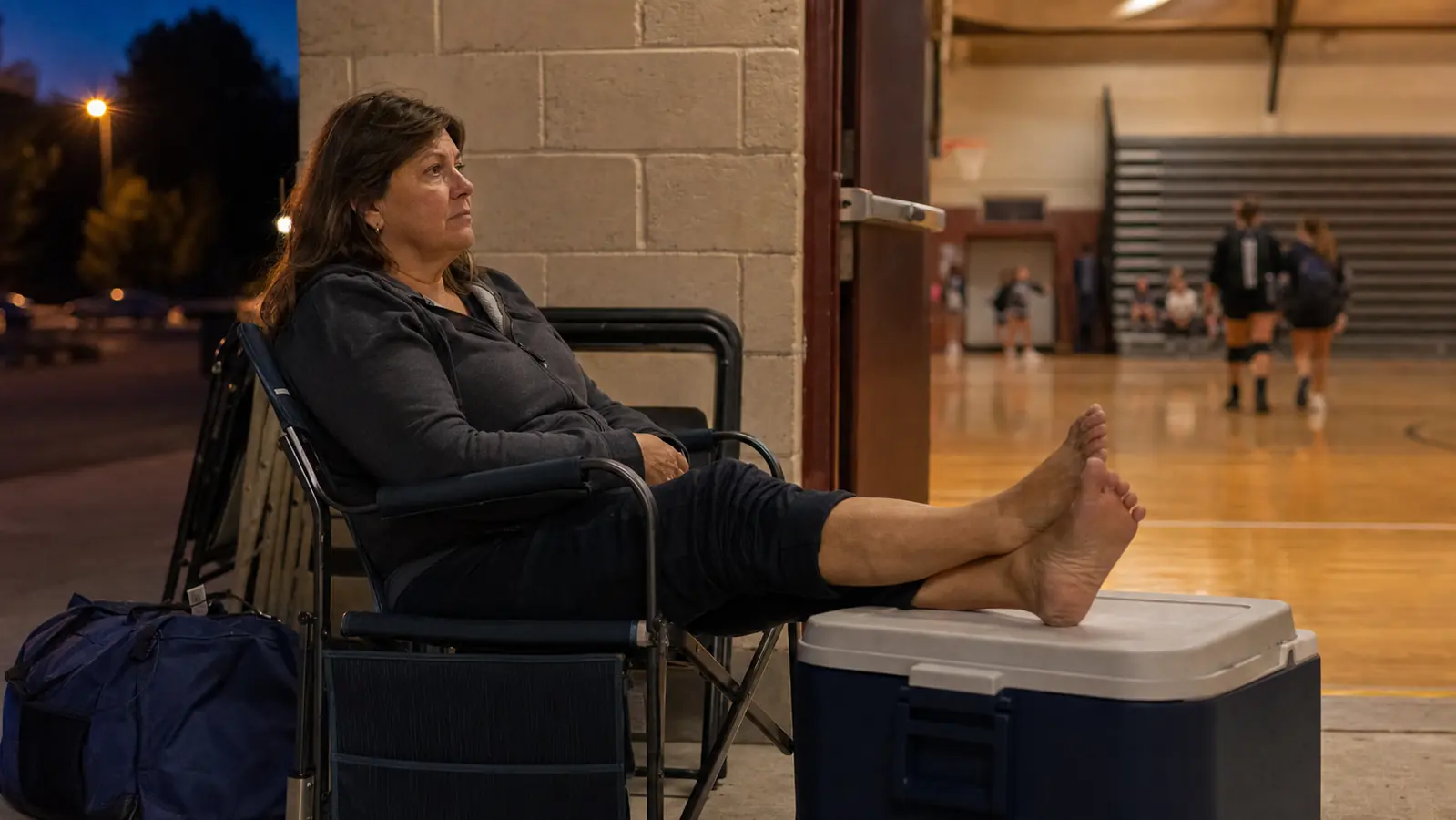
By four o'clock on a five match Saturday, my feet are done arguing about it. They just ache, flat out, arch to heel, and my right hip usually joins in somewhere around match three. Eleven years of running the snack table and hauling the ice chest at Mari's club volleyball tournaments has taught me that the drive home is not actually the end of the day. What I do in the twenty or thirty minutes after the last whistle decides whether I wake up Sunday able to get out of bed normally, or whether I spend the whole day moving like I slept on a gym floor myself.
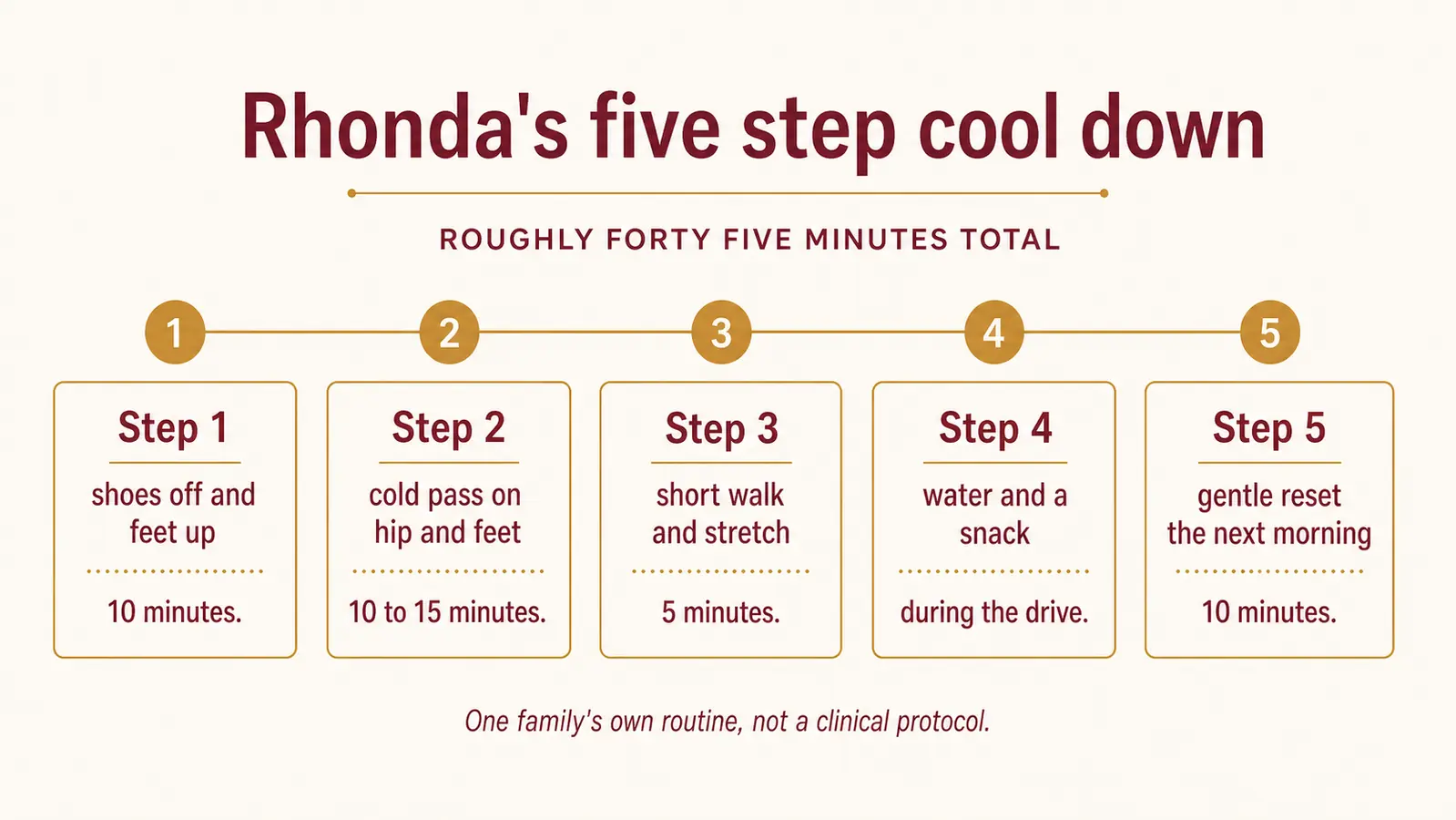
This is the cool down routine I actually run through every tournament Saturday, feet and hip both, built over a few seasons of trial and error, plenty of it wrong before it got right. It leans on one small tool that lives in my tournament bag now, the iECO ice roller, but every step here works with a bag of ice from the cooler too if you would rather not add anything to your bag.
Before Step One, Here's What Actually Rides in My Cooler
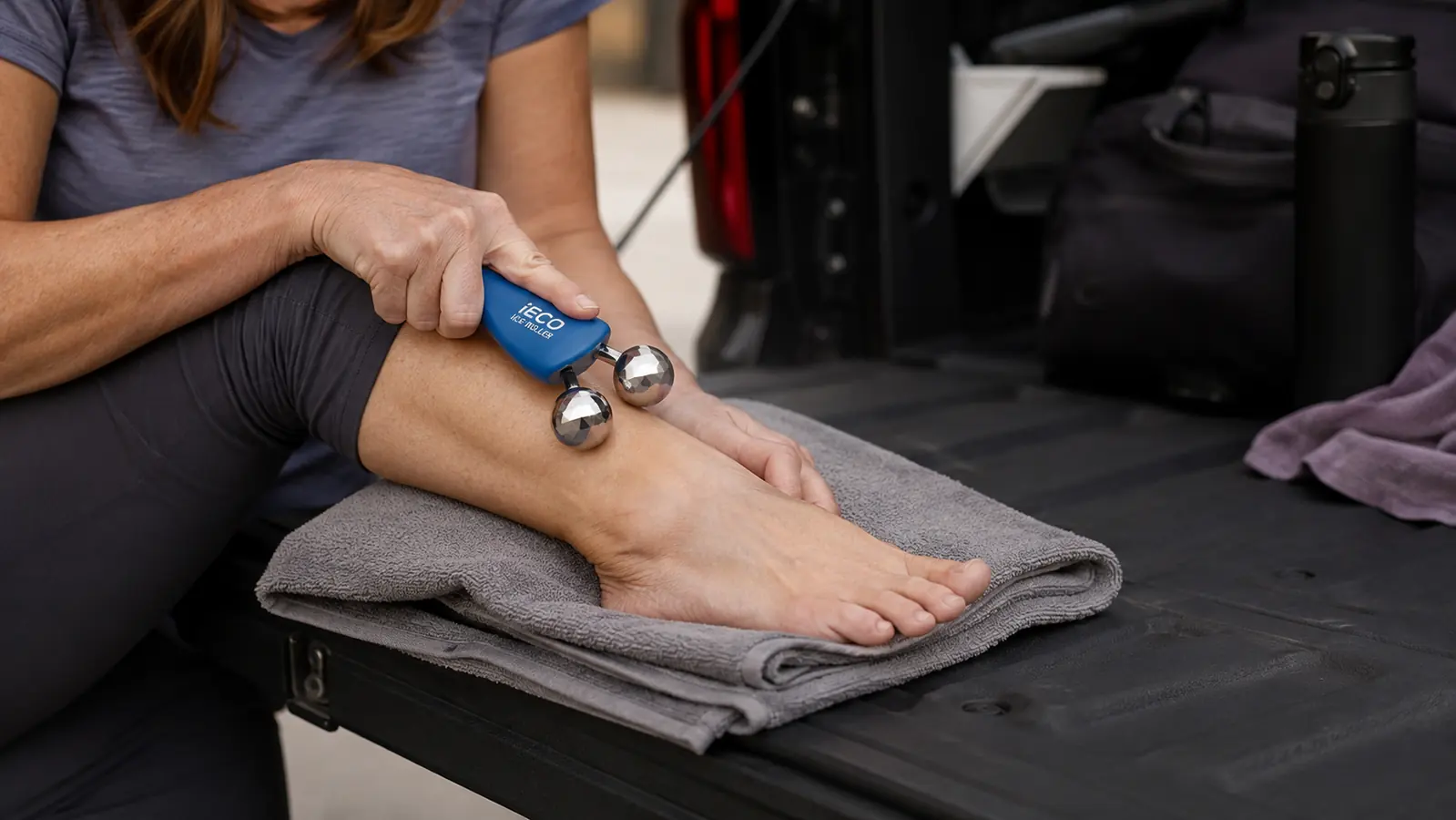
The tool I reach for first is the iECO ice roller. It is small enough to sit in the sideline cooler between the juice boxes, needs no batteries or charging, and it is the thing I actually hand Mari between sets instead of digging out a soft, half melted gel pack. It will not fix anything on its own, but it makes the routine below faster and less messy.
Amazon Check Today's Price on Amazon →Step 1: Shoes Off and Feet Up Before You're Even Out the Gym Doors
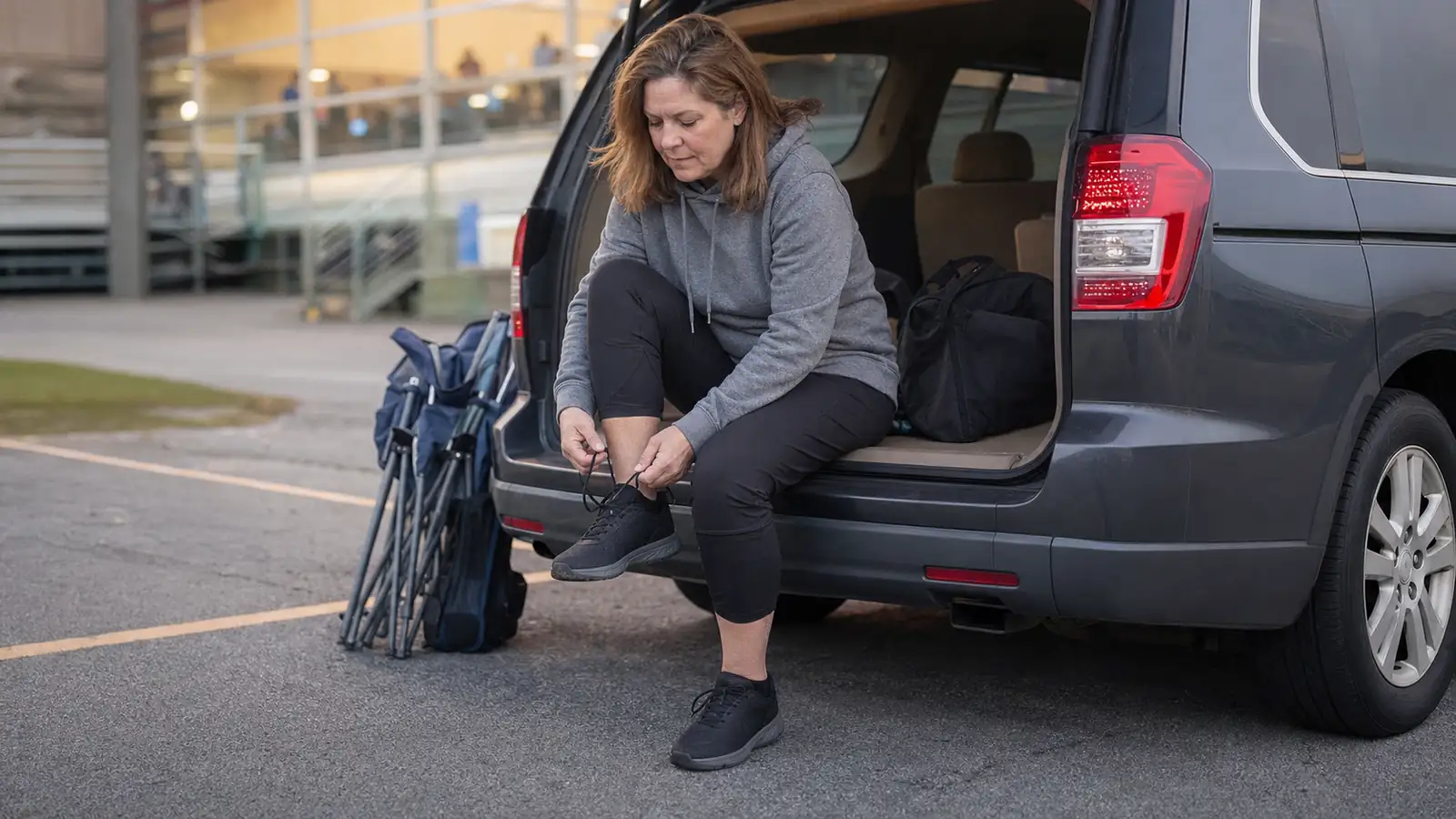
The single biggest mistake I made for years was leaving my shoes on through the whole walk to the car, then sitting in the driver's seat with my feet flat on the floor for a two hour drive back to Grand Junction. By the time we got home, my feet had swelled inside my shoes and my hip had stiffened up in that bent driving position. Now, the moment the last match ends, shoes come off. I keep a pair of slides in the car for exactly this reason, tossed in the back next to the folding chairs at the start of every season.
If there is a folding chair still set up, which there always is because I brought half of them, I sit down right there in the gym lobby or the parking lot and prop my feet on the closed cooler for five to ten minutes before we even load the car. Mari does the same on the tailgate. It sounds like a small thing to do in a gym parking lot, but getting the feet above hip level for even ten minutes, before the swelling really sets in, makes a noticeable difference in how stiff everyone feels an hour later.
This step changes a little with the season, which is worth saying because we run tournaments from late summer clear through November. On an early season Saturday when the gym is warm and the parking lot is baking, I try to get shoes off in the shade of the Pilot's hatch rather than standing in direct sun, since heat on top of swelling does nobody any favors. By November, when it is closer to freezing by the time the last match wraps up, I keep a blanket in the car so nobody is sitting still with bare feet in the cold longer than the ten minutes actually calls for. Small adjustment, but it matters.
Step 2: A Short, Deliberate Cold Pass on the Hip and Feet
This is where the iECO roller earns its spot in the bag. While feet are still propped up, I take it out of the cooler and roll it slowly across the arch of each foot, along the outside of my hip, or across whatever joint is complaining that week. Ten to fifteen minutes is plenty. Cold does not need to hurt to work, and pressing hard enough to go numb is not the goal, it is a warning sign to ease off.
A few honest safety notes here, because I am not a trainer, a physical therapist, or any kind of clinician, and I want to be clear about that. Never leave any cold roller or ice pack on skin that is already numb, broken, or bruised. Keep a thin towel or sock between the cold and bare skin if you are going longer than a few minutes. Stop immediately if pain increases instead of easing, if skin turns white or blotchy, or if anything feels wrong beyond ordinary tournament day soreness, and talk to an actual doctor rather than pushing through it. Cold makes a normal, hard day on the body more bearable. It does not diagnose or treat an injury, and it is not a substitute for the actual trainer at Mari's club, or for a doctor, if something feels off.
The iECO roller works well here specifically because it moves. A bag of ice sits on one spot and gets heavy fast, but a roller lets you cover the arch of a foot, then the heel, then along a hip line in slow passes, which is closer to what actually feels good after standing on a gym floor for six hours. If you want the longer comparison between this and a plain ice pack from the cooler, I wrote up what each one is actually better at in ice roller versus ice pack for tournament days.
Not everyone in the family needs the same amount of time or the same spot. Mari's knees and my hip get the bulk of it during volleyball season, ten minutes each, usually back to back while we are both still sitting with feet up. Theo is different, wrestling has long gaps between matches instead of one steady grind, so he tends to reach for it earlier in the day, right after a match rather than only at the very end, and rarely for more than five or six minutes at a time before he is up and moving on his own again.
Step 3: Move Before the Drive Locks You Up
Sitting still right after standing all day feels like the obvious relief, but a short walk before you get in the car matters more than people expect. I walk one slow loop of the parking lot, maybe two to three minutes, before I ever get behind the wheel. It is not exercise, it is just circulation, and it keeps my hip from locking into that seated angle the second I sit down.
Mari adds a few gentle stretches here too, nothing intense, mostly calves and hip flexors, the kind her club trainer actually showed her, not anything I made up. I stick to a light standing hip circle and a slow ankle roll for each foot. None of this is complicated or takes more than five minutes total, and it is the difference between climbing into the Pilot loose versus climbing in already stiff.
Step 4: Water and a Real Snack Before the Drive Home
By the fourth or fifth match of the day, everyone in this family is running on whatever was left in the snack table cooler, and that is usually not enough. Before we pull out of the parking lot, I make sure everyone has had actual water, not just a swallow, and something with real food in it, not only a granola bar. Being dehydrated and under fed makes every ache feel worse on the drive, and it makes the next morning rougher too.
This part of the routine has nothing to do with any product and everything to do with just not skipping it because everyone is tired and ready to leave. I keep a case of water and a bag of pretzels or fruit in the Pilot from August through November specifically so this step never gets skipped because the snack table is already packed away by the time we finish.
Step 5: A Gentle Reset the Next Morning, Not a Rest Day You Regret
Sunday morning used to be a full stop for me, sitting on the couch all day because everything ached. What actually works better is ten minutes of easy movement not long after waking up, a slow walk around the block, or a light pass with the iECO roller again on whatever is still stiff. Staying completely still for a full day after a hard tournament tends to make Monday worse, not better, at least for my hip.
Mari and Theo handle this differently depending on their sport and their own trainers' instructions, and I am not going to pretend I know the right protocol for a competitive fourteen year old wrestler versus a fifty four year old scheduler who spent the day on bleachers. What I know is what works for me, and what I have watched work for my own kids over a few seasons of paying attention to what actually helps versus what just feels like it should.
What Else Helps
Shoes matter more than I gave them credit for. The tournament Saturdays where my feet held up best were the ones where I wore actual supportive sneakers to the gym instead of the flat sandals that were easier to slip on and off. A cheap set of arch support inserts made more difference for me than almost anything else on this list, and they cost nothing to add to shoes I already owned. A warm bath or shower that same evening, not the next morning, seems to help my hip more than the cold does by itself, probably because the cold, whether from the iECO roller or a plain bag of ice, takes the edge off the ache during the day, and the warmth loosens things back up before bed.
None of this replaces an actual visit to a doctor if pain sticks around for more than a few days, gets worse instead of better, or shows up somewhere new that has never bothered you before. Danny will not go to a doctor until I make the appointment for him, which tells you something about how often men in this house wait too long, and I would rather someone reading this go a week earlier than we usually do. A cool down routine like this one is for ordinary soreness from a long day on your feet, not a substitute for checking with someone qualified when something feels genuinely wrong.
The iECO roller does not fix a tournament Saturday. Nothing in this routine does. What it does is make the twenty minutes after the last whistle count for something instead of just collapsing into the car seat and hoping Sunday is kind.
If you want the fuller picture of how this roller has held up for us over a whole season, including the parts I would not have known without months of actual use, I wrote it all up in the long term review, and the more unfiltered version of what nobody tells you before you buy one is in the honest review.
Ready to Build This Into Your Own Tournament Bag?
The iECO ice roller is the piece of this routine that actually rides along every Saturday, no batteries, no cords, small enough to sit in the cooler next to the juice boxes. If your feet and hip are the ones complaining by the third match, it is a small, low effort thing to add to the bag before the next tournament.
Amazon Check Today's Price on Amazon →